“For every complex problem there is an answer that is clear, simple, and wrong.”
H. L. Mencken is often credited with this quote, but, ironically, this version of the quote appears to be a simplified paraphrase of the original. That seems fitting. The instinct to simplify things is powerful.
That quote came to mind as I read the coverage of the May 2026 Education Scorecard report. To be clear, the report represents important and impressive work, supported by some of the most respected organizations and experts in the field. The findings deserve careful attention.
Their conclusions are persuasive: There has been a significant and persistent downturn in student achievement since about 2013, years before the pandemic. While there are some signs of modest recovery, especially in math, the overall picture remains concerning. The authors call the trend a “learning recession,” and that seems apt.
The more difficult question is what caused the decline. To their credit, the report’s authors carefully interpret the evidence. Some public commentary, however, has been less cautious, suggesting that weaker accountability systems caused the achievement slide.
Leaning into any one cause may lead to quick-fix policy changes. The problem is more complicated than it seems.
Why is it so difficult to reach conclusions? I’ll discuss three related challenges.
Limited Causal Evidence
We have far more data showing what happened than evidence demonstrating why it happened. NAEP, state assessments, interim assessments, and other large-scale data sources can reveal important patterns. They can show whether achievement is rising or falling, where declines are concentrated, which groups are most affected, and how performance differs across places.
But descriptive data do not support causal claims. We can observe achievement declines during a period when social media use increased or when accountability systems changed, but it cannot be used credibly to signal which factor or combination of factors is the cause.
In this quasi-experimental study, the authors used a time-series design to compare performance among states with similar versus different accountability systems following the introduction of NCLB. They found a modest positive impact on grade 4 math achievement. But even relatively strong evidence is rarely definitive: Those effects did not extend to reading or 8th grade math, and other sources of variation remained unaccounted for.
Student Achievement Is Highly Context-Dependent
Another challenge is that achievement does not respond to single influences in uniform ways. Learning is influenced by many factors related to what is being learned, the learner, and the learning environment. Moreover, these factors interact, which makes causal interpretations challenging.
A policy, practice, or resource that helps one group of students may have little effect, or even a negative effect, on another. Technology is a good example. In the hands of students still developing foundational skills, technology may distract from learning. In the hands of more expert students, it may accelerate access to information and deepen learning. The same factor can have different effects depending on the student, task, subject, teacher, and setting.
The same is true for other potential interventions like curriculum reforms, accountability pressure, or attendance policies. None of these operates in a vacuum. Their effects depend on factors such as implementation, student characteristics, and other conditions. This does not mean we shouldn’t pay attention to trends. It means that trends rarely have a single, universal explanation.
Competing Explanations
Many scholars have offered other explanations for achievement declines. Wykcoff discusses several possibilities in his excellent 2025 article, including weakened accountability, reduced funding, increased smartphone use, changing school policies, and shifting student demographics.
Assessing these explanations requires considering what would have happened otherwise, often called a counterfactual. Multiple explanations may be plausible, and more than one may be partly right.
Sometimes we encounter evidence that complicates a preferred explanation. For example, states with similar school accountability systems and policies can show very different performance patterns over time. NAEP trends from 2019 to 2024 illustrate the point: Mississippi’s results were comparatively stable, with only modest declines, while Florida and Oklahoma, which have systems similar to Mississippi’s, experienced more pronounced declines in reading and math in grades 4 and 8 over the same time period.
This observation does not prove or disprove any particular hypothesis about accountability systems. Instead, it is a reminder that we have to go beyond the surface to better understand what is happening. And without a better understanding of potential counterfactuals it’s challenging to reach firm conclusions.
How Do We Respond?
Again, my point is not to dismiss the idea of a “learning recession.” I think the evidence is persuasive that something serious has happened and that the consequences are substantial. But if we care about responding effectively, we need to be cautious about rushing to causal leaps. But what should we do in the face of uncertainty?
First, we should protect and strengthen the data systems that allow us to see these patterns in the first place. That includes NAEP and strong state assessment systems. In the current environment, this point may seem obvious, but it is worth saying plainly. We need to safeguard sources of credible, comparable evidence (as I discussed in another blog).
Second, we should act on the strongest evidence we already have. We are not starting from scratch. For example, decades of research and practice have identified important elements associated with successful school improvement, even if they do not offer a simple formula that works everywhere.
Similarly, a substantial body of evidence supports targeted interventions such as intensive tutoring, particularly when it is frequent, closely connected to classroom instruction, and delivered by well-prepared educators. The lesson is not that leaders should adopt any single model without regard to context. It is that uncertainty about the precise causes of recent achievement declines should not prevent us from drawing on credible evidence about the practices most likely to help. We should begin with what is already known, implement it well, and examine whether it is producing the intended results.
Third, we need more focused research to extend our knowledge in areas where the research base is not as strong. This has to go beyond broad hypotheses to specific claims about what makes a difference. For example, it’s not enough to say strong accountability matters; we need to clarify what about strong systems is thought to move the needle. Is it the incentives, the access to data, or the deployment of supports? Or, likely, a combination of these factors?
We should not expect every question to be answered through an experimental or quasi-experimental design, but we should insist on better evidence where possible. Leveraging growth data is a good starting point. High-quality growth measures can compare students with similar prior achievement, helping to account for confounding factors. This does not eliminate rival hypotheses, but it can provide a clearer signal than status measures, such as proficiency, alone.
Fourth, we should create more opportunities and support for education leaders to learn from the data and from one another. Moreover, state and district leaders need mechanisms to share research, implementation strategies, and promising practices. Initiatives such as the Council of Chief State School Officers (CCSSO) state collaboratives provide useful models. The goal should not be to chase simple solutions, but to understand what is working, for whom, under what conditions, and why.
Finally, we should look to action research or to pilot solutions whenever possible before scaling broadly. These approaches do not produce perfect counterfactuals, but they move us closer by allowing leaders to test ideas in limited settings and examine whether changes align with the theory of action.
They also help answer practical questions: Did outcomes improve where the policy or initiative was implemented? Did results vary by student group, grade, subject, or implementation quality? What conditions seemed necessary for success? This kind of evidence can help distinguish promising ideas from appealing explanations before large-scale policy commitments are made.
There are, indeed, troubling trends in student achievement that are serious and demand action. At the same time, they are complex enough to demand humility. Let’s look beyond the headlines and insist on evidence-based strategies to guide improvement.
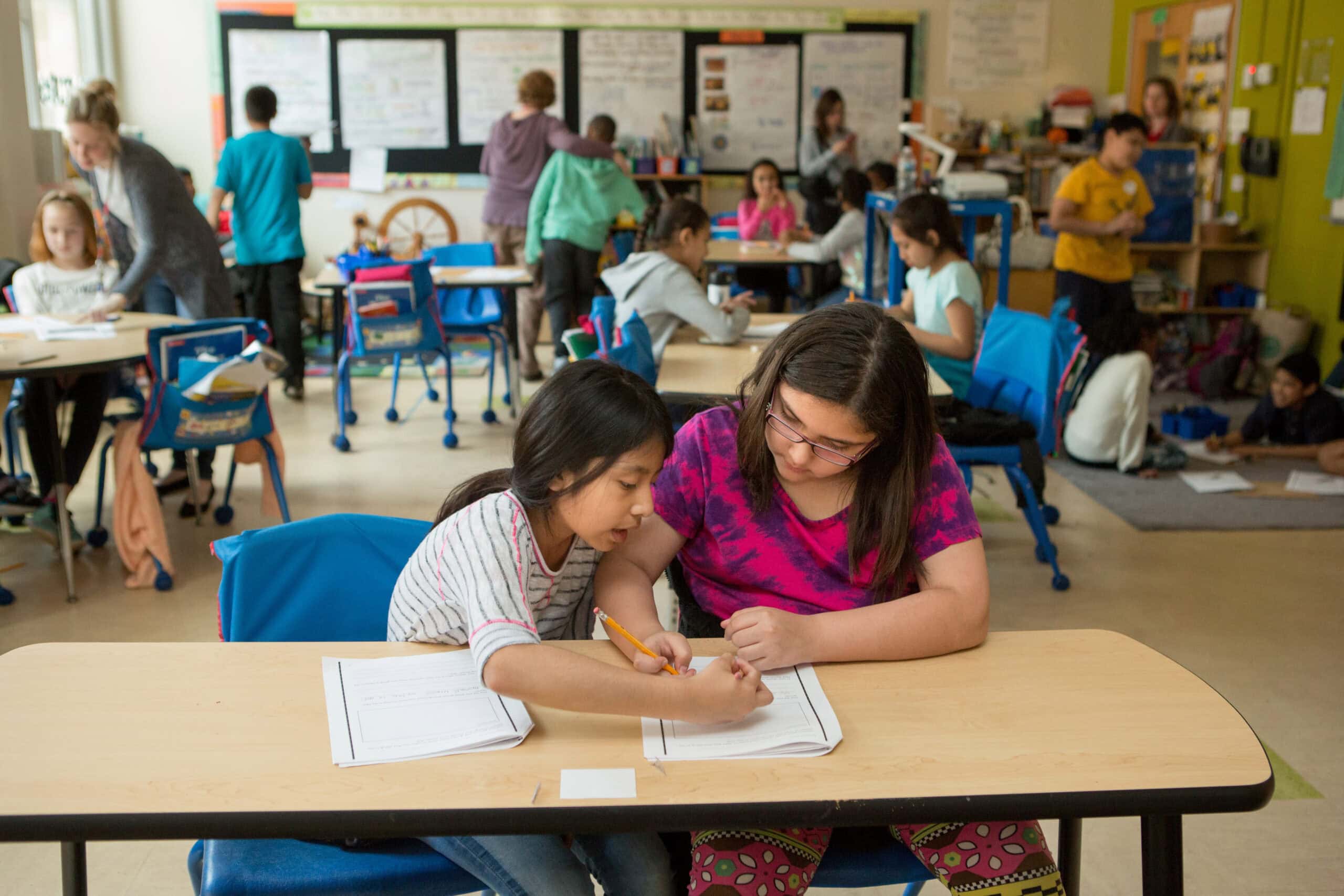
Photo by Allison Shelley/The Verbatim Agency for EDUimages